【Voyage Log 02】From Cebu to Subic – Engine Trouble on the 1st day
2026年8月7日10:00予定通りセブ・カーメンのシップヤードを離岸しようとしてすぐ前の浅瀬に座礁してしまった。原因はエンジンのプロペラシャフトとユニバーサルジョイントを繋ぐカップリング部のステンレスのピンがせん断破損したため、プロペラが空回りし、艇のコントロールができなかったこと。すぐにシップヤードの溶接工にピンと取り替えてもらい、翌日8月8日6:30にスービック に向けて出航した。沖に出てセールを揚げて、北に進路をとったところでエンジン音に異常を感じた。今度はユニバーサルジョイントカップリング部の4本のボルトの内3本が緩んでおり、プロペラシャフトが芯ずれして回転している音だった。即座にエンジンを止めて、緩んだボルトを締め直し事なきを得た。その後17:00まで順調に機帆走を続け、セブ島北部ボゴ北でアンカーを打ったが南からの波があり艇の揺れが抑えられないため、風も弱かったこともあり夜間走行することを決めた。今思うとこの判断が少し甘かったと思う。
On August 7, 2026, at 10:00 AM, as planned, we attempted to leave the shipyard in Camen, Cebu when we ran aground on a shallow area just ahead. The cause was shear failure of the stainless steel pin in the coupling connecting the engine’s propeller shaft to the universal joint, causing the propeller to spin freely and lost boat control. We immediately had a welder at the shipyard replace the pin, and the next day, August 8, at 6:30 AM, we set sail for Subic. Once we were out at sea, raised the sails, and set course north, we noticed something unusual sound from the engine. This time, three of the four bolts in the universal joint coupling had come loose, causing the propeller shaft to rotate misaligned. We immediately stopped the engine and tightened the loose bolts. We continued sailing smoothly until 5:00 PM, and dropped anchor north of Bogo in northern Cebu. However, there were waves from the south, and the boat was rolling uncomfortably, so we decided to sail at night, as the wind was also light. Looking back, I think this was a naive decision.
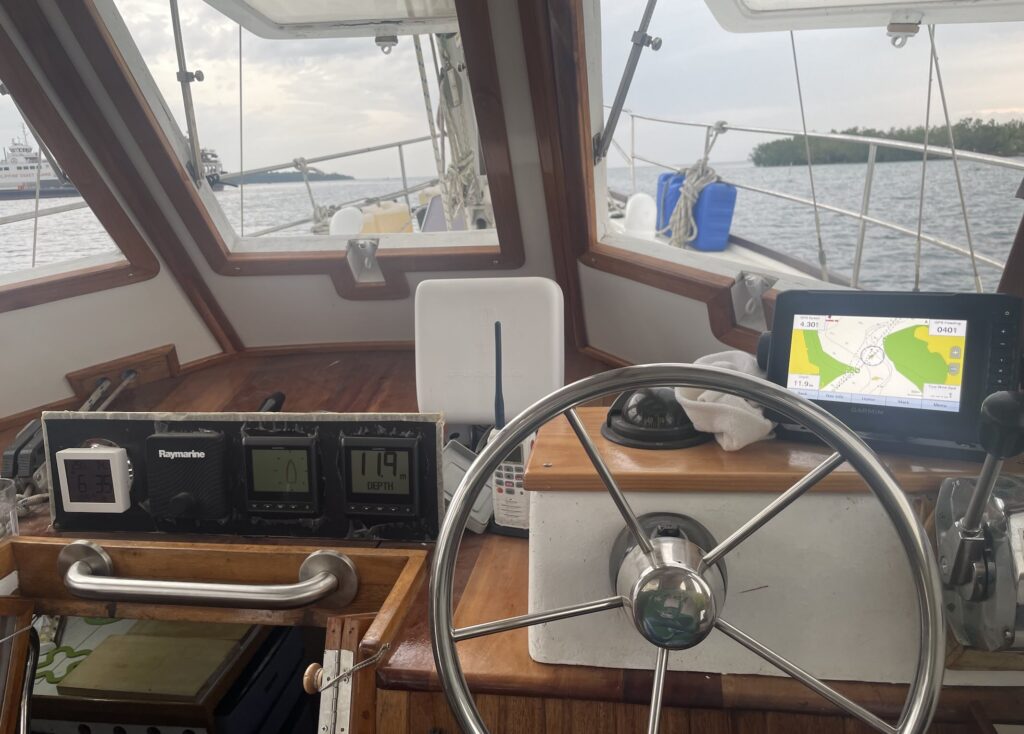
朝6:30 カーメンのシップヤードの水路を抜けて外海へ。
6:30 a.m.: Through the canal at Carmen Shipyard and out into the open sea.
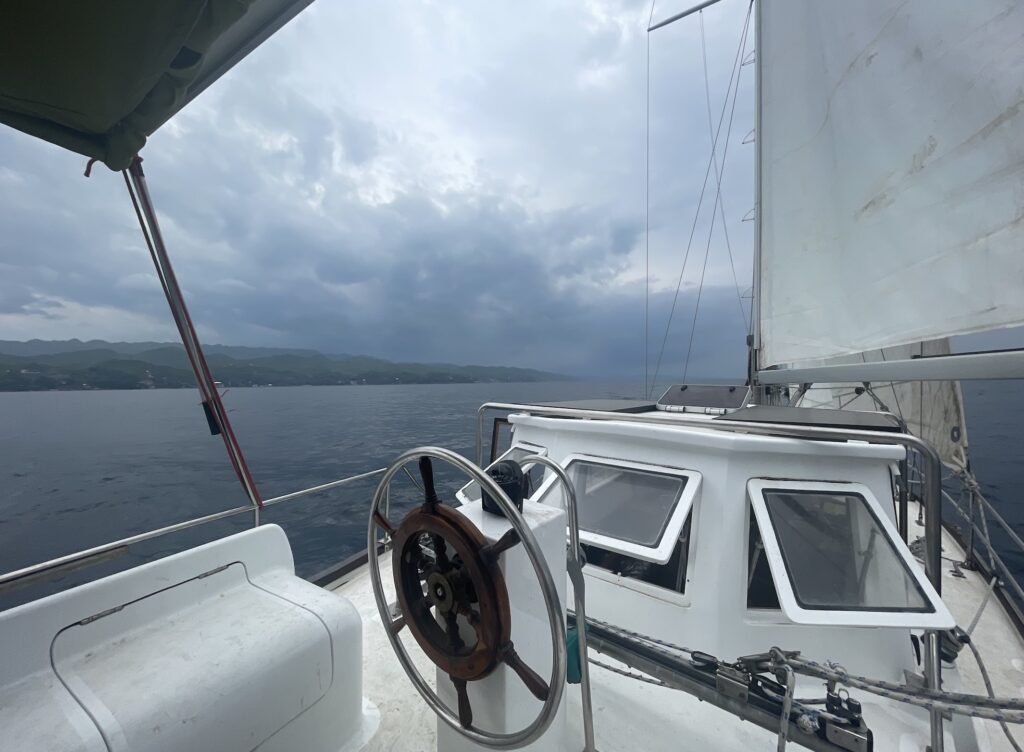
セブ島東岸に沿って北上中。
Heading north along the east coast of Cebu Island.
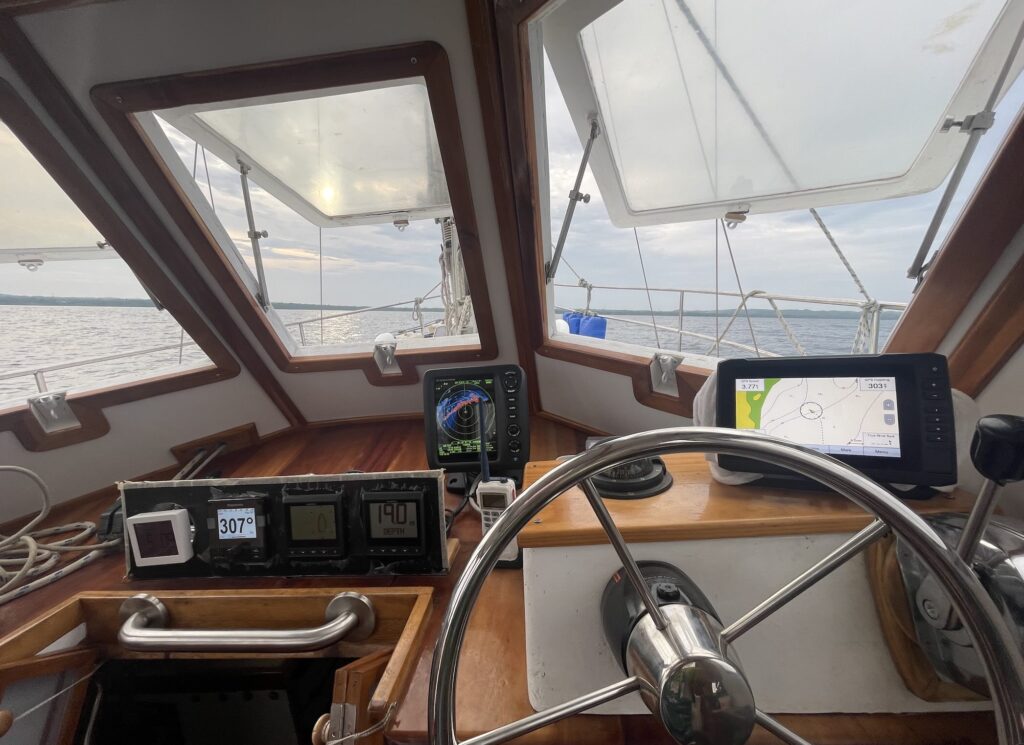
セブ島北部ボゴの北側でアンカーを打ったが、波があり停泊を断念して航海継続を判断。
We dropped anchor north of Bogo in northern Cebu, but due to rough seas, we decided to abandon our attempt to anchor and continue our voyage.
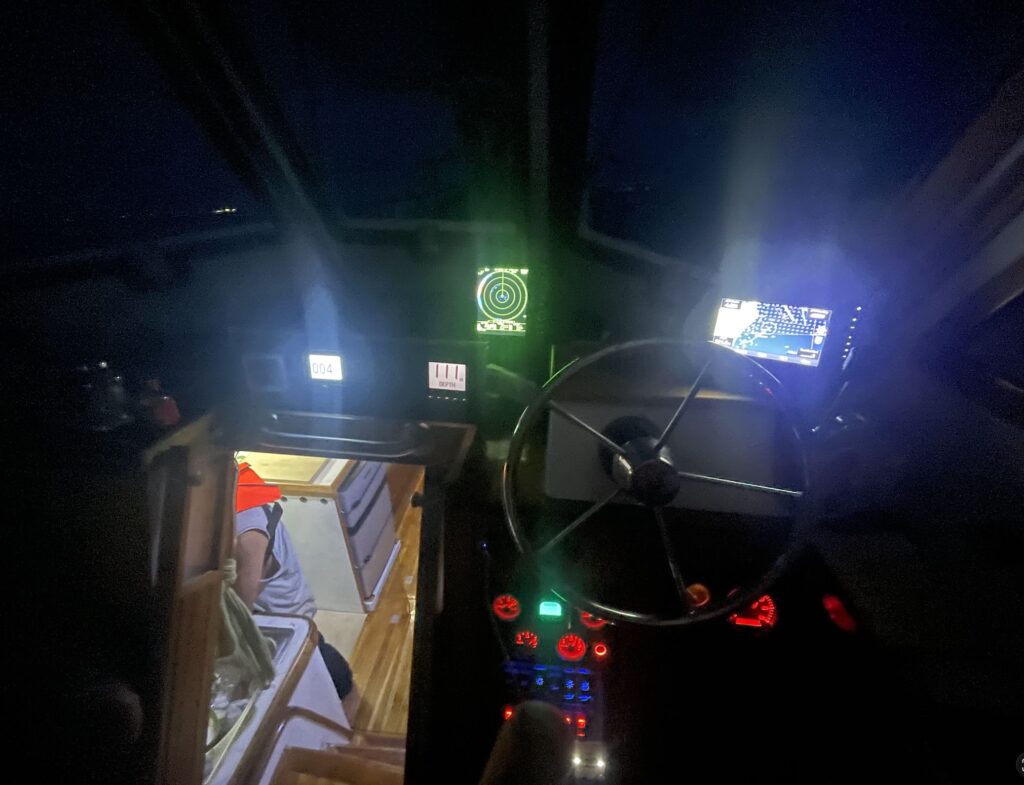
セブ島北端を回って進路を西に取るべく北上中に日が暮れた。この時は風も波も穏やかだったのだが。夜間の走行に備えてセールは下ろして機走で走ることにした。
As we sailed north around the northern tip of Cebu Island to set a course westward, the sun began to set. The wind and waves were calm at the time, but we decided to lower the sails and motor on in preparation for sailing at night.
セブ島北端を回航後、進路を西にとったあたりから、南西の風が強くなり一時は15m/sほどに上がった。左舷からの波も大きくなり艇は大きくローリングした。1500~1800rpmで機走、日付が変わり午前2:00ごろエンジンルームから煙が出て、オーバーヒートでエンジンを停止した。ベアポール状態で夜明けを待って、セーリングにてカーメンのシップヤードに戻ることを決めた。周囲が明るくなった早朝5:00過ぎ、ラダーをコントロールする油圧シリンダー軸がラダー部から外れていることが判り、締め直してセールを揚げて帆走を開始した。南西の風に対して登りのコースとなる。もともとケッチであった勇魚は、今はミズンが無いため登り性能が著しく悪いことに気付くことになる。ミズンなしではタックも一苦労のセーリングを余儀なくされた。カーメンまで帰るにはあまりにも時間が掛かり過ぎるため、シップヤードに連絡して引船を依頼した。結果、パワーボートで曳航してもらい、カーメンに戻ったのは3日目のもう日が暮れた20:00頃であった。
After rounding the northern tip of Cebu Island, we took a westward course and the southwest wind became stronger and at one point was about 15 m/s. The waves from the port side were also large, and the boat rolled significantly. The engine was running at 1,500 to 1,800 RPM and the date changed and around 2:00 a.m. smoke came out of the engine room, and the engine stopped due to overheating. We decided to wait for dawn in bare pole condition and return to Carmen’s shipyard by sailing. After 5:00 a.m. in the early morning when the surrounding area was bright, it was discovered that the hydraulic cylinder shaft that controlled the rudder had come loose from the rudder section, so we retightened it, hoisted the sail, and started sailing. The course climbs against the southwest wind. Isana, who was originally a ketch, now has no mizzen, so she notices that her climbing performance is significantly worse. I was forced to sail without a mizzen, even making it difficult to tack. It would take too long to return to Carmen, so I contacted the shipyard and requested a tug. As a result, a power boat was arranged to tow us, and we returned to Carmen around 20:00, when the sun had set on the third day.
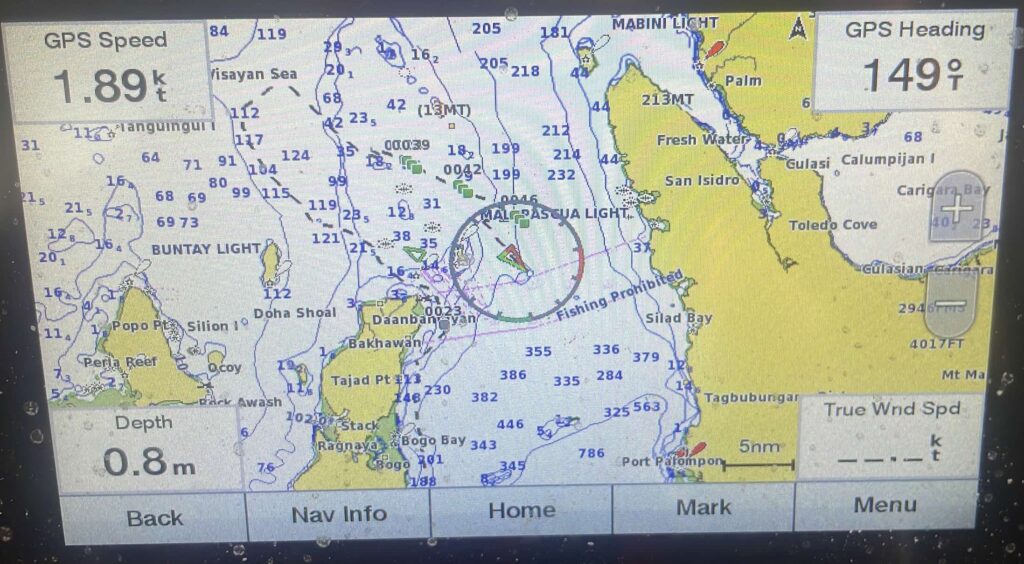
2日目昼頃、何とかセブ島北部までセーリングで引き返してきた。陸が近くなりネットが復活したので、シップヤードに曳航を依頼した。
Around noon on the second day, we managed to sail back to the northern part of Cebu Island. As we got closer to land, our internet connection came back, so we requested a tow to the shipyard.
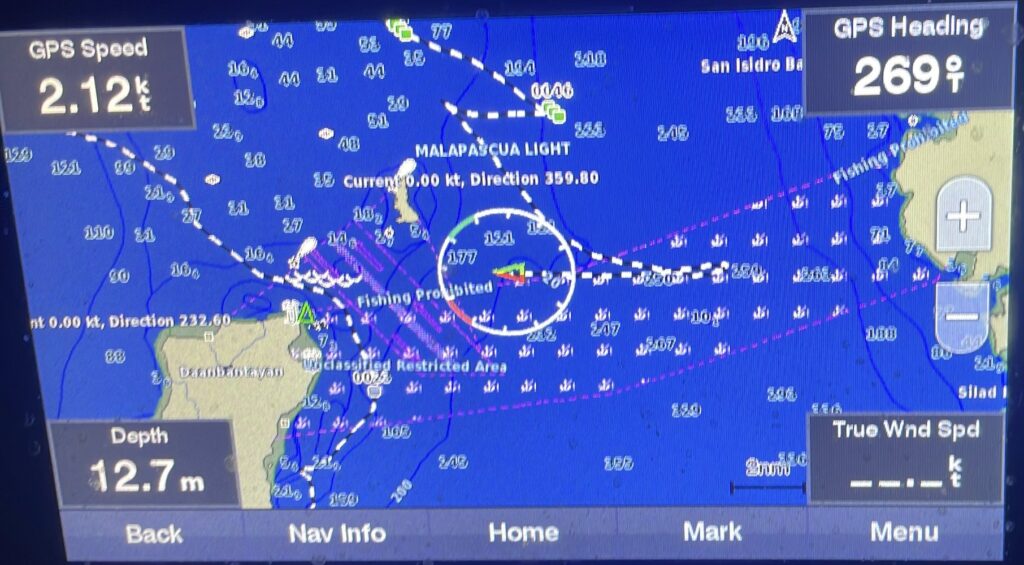
2日目深夜、陸から離れ過ぎたためネットが切れて曳航船に位置が伝えられなくなり、再び岸に向かって帆走。
Late at night on the second day, we drifted too far from land, causing our internet connection to drop and making it impossible to relay our position to the tugboat, so we set sail back toward shore.
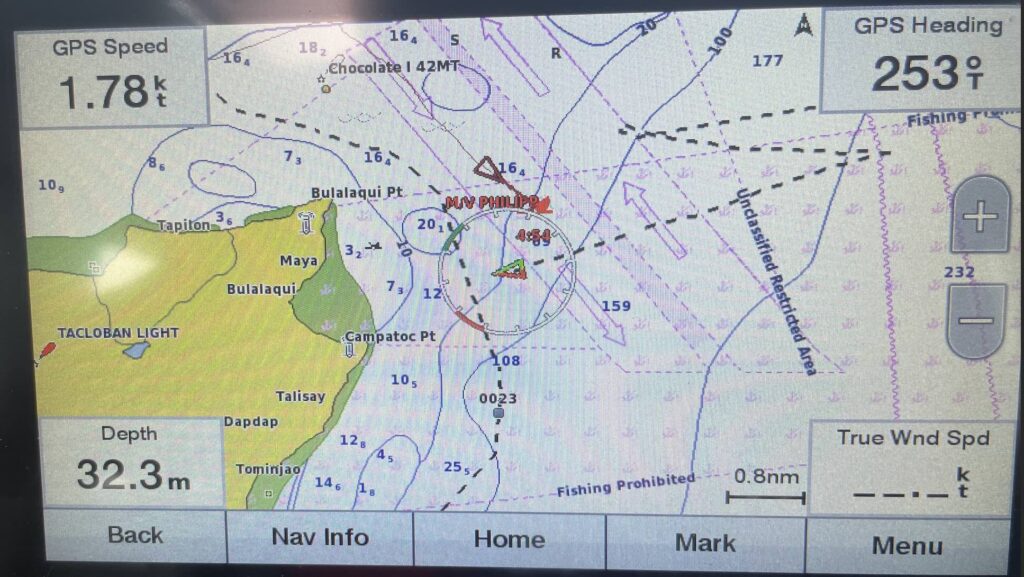
3日目早朝、ここで曳航船に出迎えてもらえた。航跡を見ると上り性能が悪いことが一目瞭然。
Early in the morning on the third day, a tugboat came out to meet us here. Looking at the wake, it was immediately obvious that the ship’s upstream performance was poor.
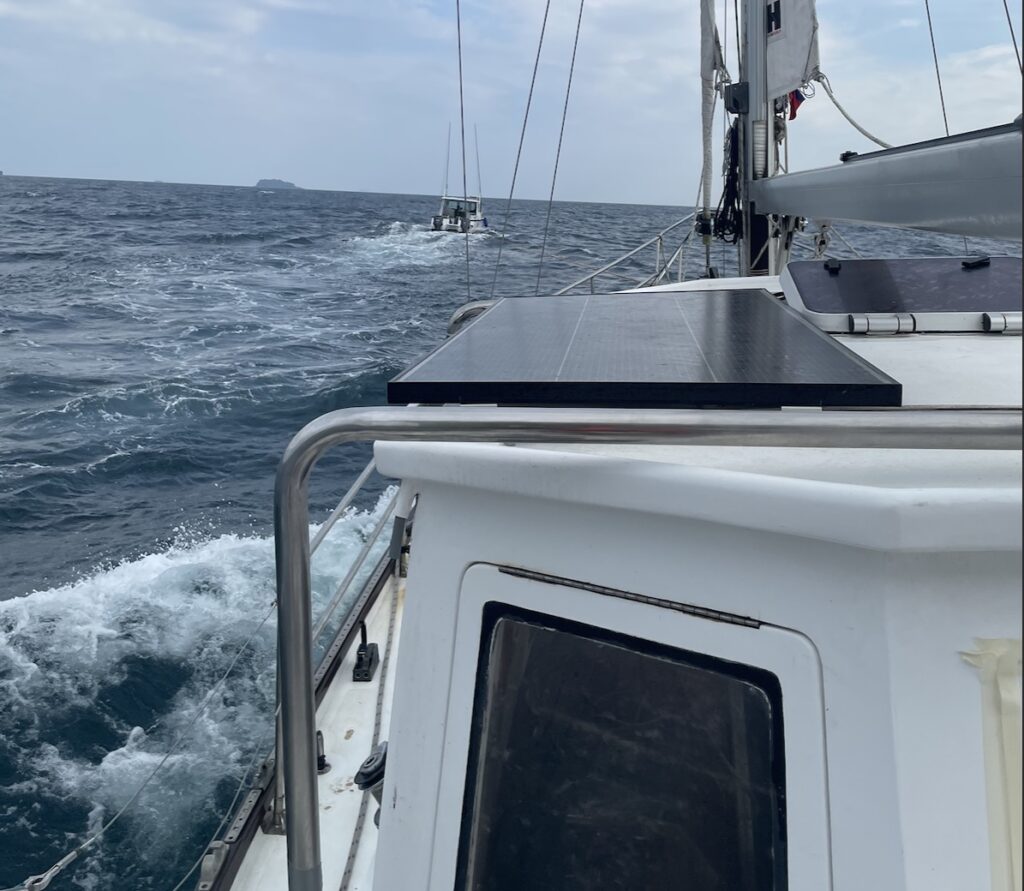
200HP 船外機2機搭載のカタマランスピードボートで曳航中
Being towed by a 200-HP catamaran speedboat equipped with two outboard motors
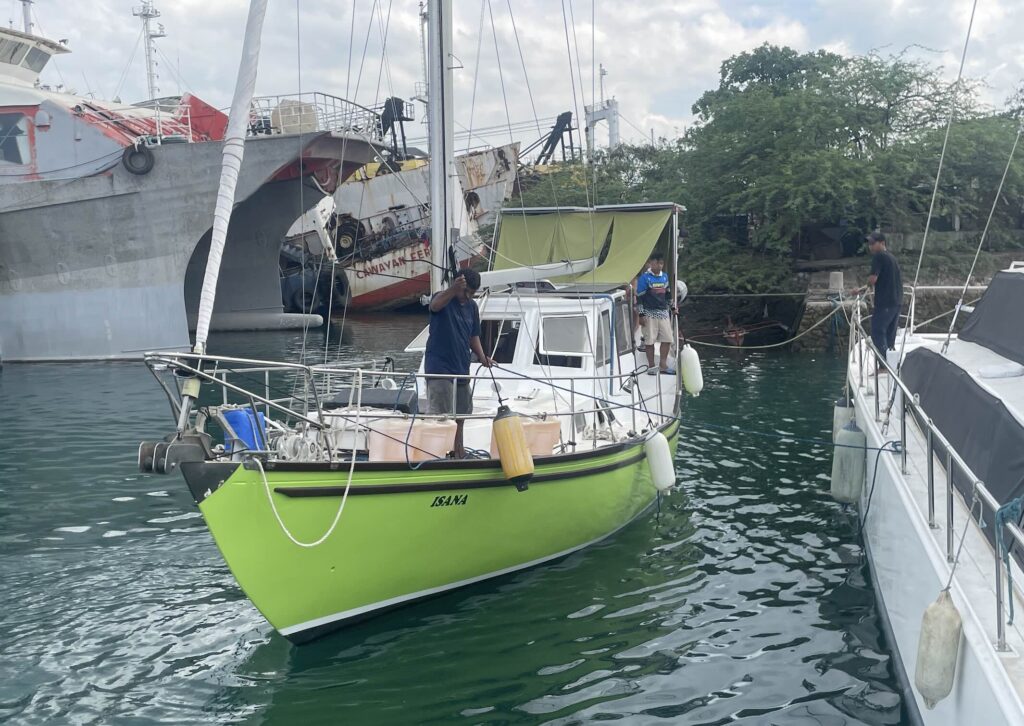
4日目の勇魚、シップヤードに帰着。
Day 4: Isana, Back at the shipyard.
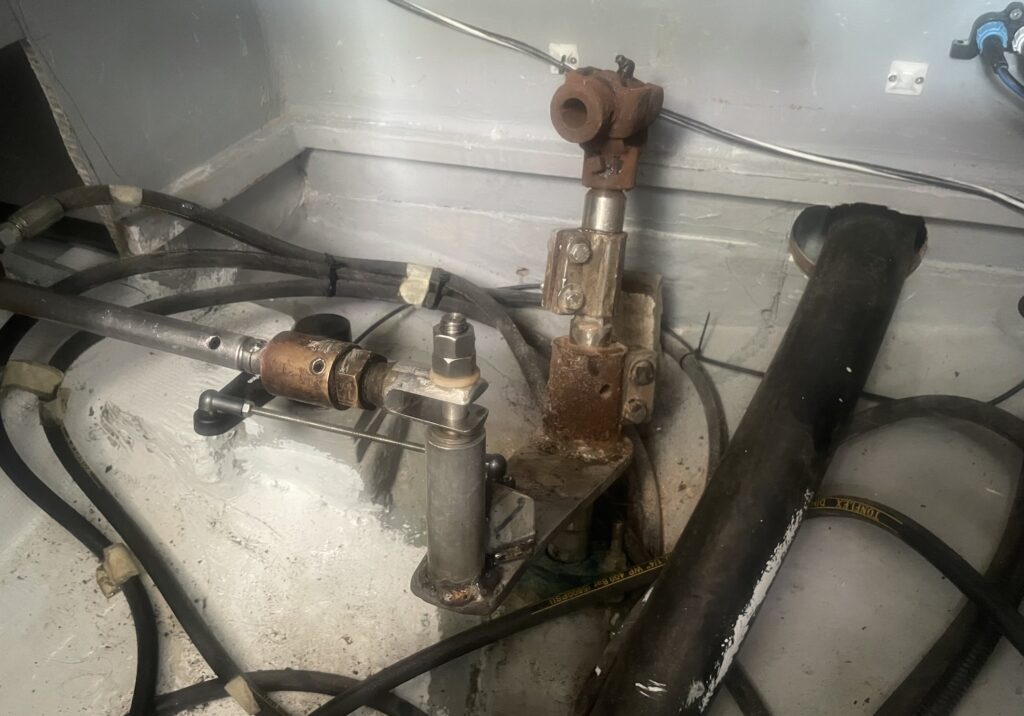
油圧ラダーコントロールシステム。シリンダーロッドとユニバーサルジョイント部のネジが緩んで外れていいたため点溶接で緩み防止措置。また鉛直部材も径の大きな軸材に交換して溶接にて強固に固定した。
Hydraulic ladder control system. Since the screws connecting the cylinder rod and the universal joint had loosened and come off, spot welding was performed to prevent further loosening. In addition, the vertical member was replaced with a larger-diameter shaft and securely fastened by welding.
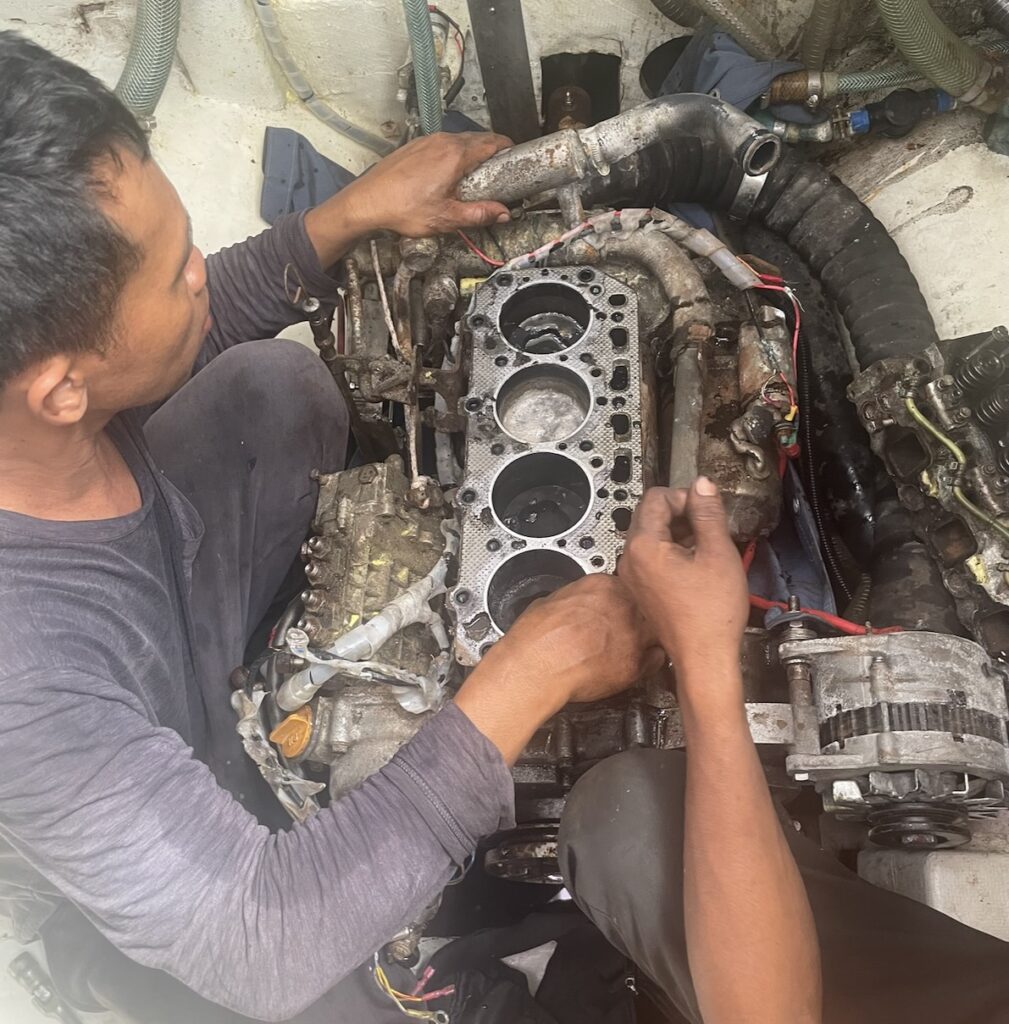
メカニックがエンジンシリンダーカバーを外してピストン、リングなどの損傷を確認。特に損傷はなくガスケットのみ交換。オーバヒートの原因は冷却水インペラー破損によることが判明。
The mechanic removed the engine cylinder cover to inspect the pistons, rings, and other components for damage. No damage was found, so only the gasket is to be replaced. It was determined that the overheating was caused by a damaged coolant impeller.